A way into the work.
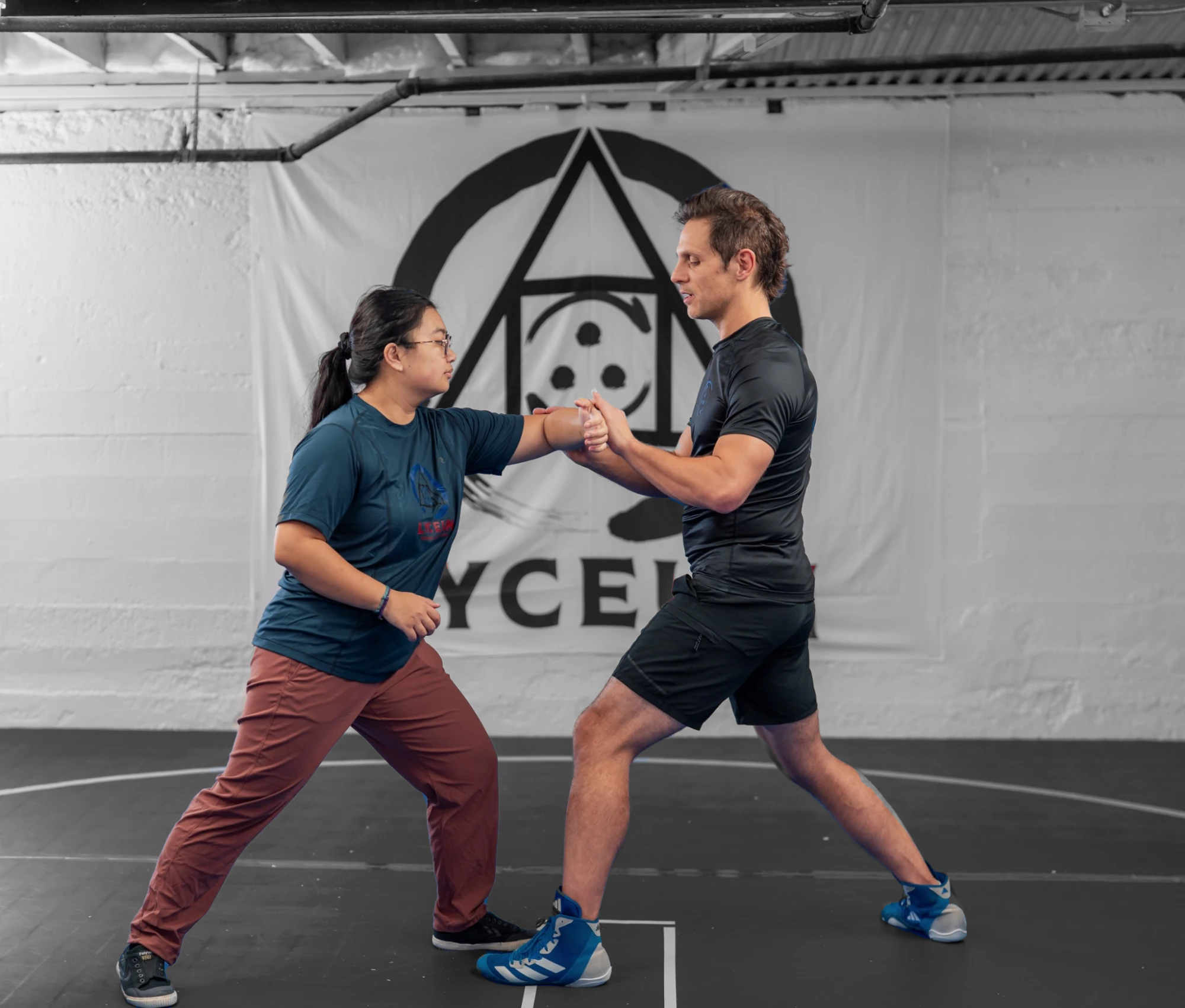
Tai Chi at Lyceum is practiced as a martial art, with particular attention to standing grappling, balance, and contact. Push Hands is a central way to explore those ideas. Solo forms provide time to study movement more slowly and bring that attention back to a partner.
China
Taijiquan comes from China. UNESCO’s description traces the practice to Wenxian County in Henan Province in the seventeenth century. Multiple styles and teaching traditions developed over time. This overview supplies broad context; it does not assign an unconfirmed style or lineage to Ergo Vita’s practice.
Historical context / further reading: UNESCO: Taijiquan.
What are we really practicing?
Slowness creates time to notice
Moving slowly makes some habits easier to feel: a sudden weight shift, unnecessary tension, or a loss of connection between the feet and the hands. That awareness becomes useful when it informs how we move with another person, rather than remaining only a quality of solo practice.
Push Hands makes balance relational
A partner gives immediate feedback about where your support ends and where you can still move. We investigate receiving, organizing, and redirecting pressure. Yielding is not collapse; maintaining structure does not require meeting every force with more force.
Adaptability matters more than appearance
A posture can look composed while being unable to change. Partner work asks a different question: can the organization remain useful as direction or pressure shifts? We return to forms with those experiences, using each mode of practice to sharpen the other.
A question to take to the mat:
Can you change your relationship to the pressure without losing your own support?
Lyceum’s approach, adapted from The Big List and our notes on learning and partnership.