A way into the work.
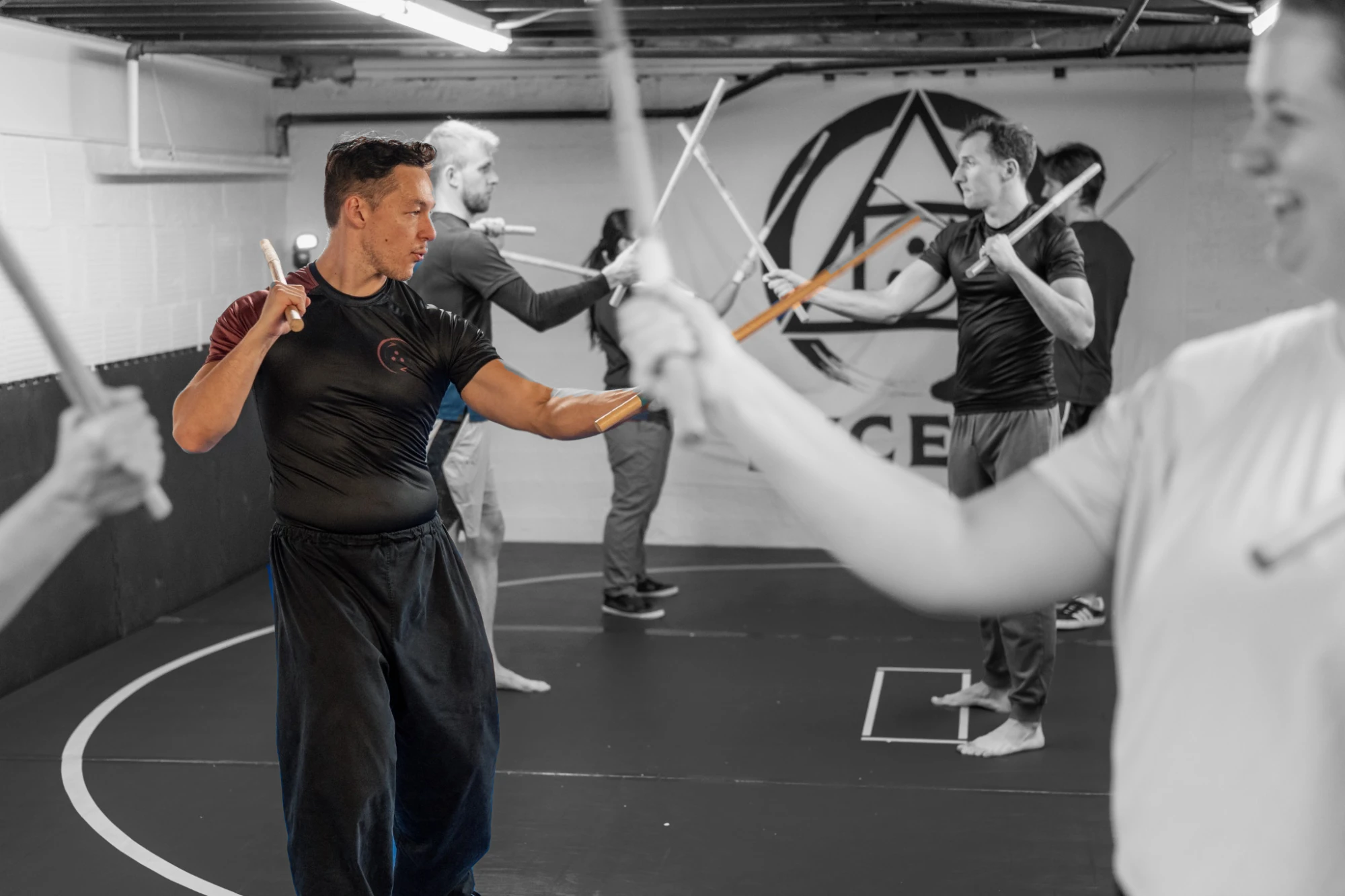
The MKG Blend brings striking, weapons, clinch work, and grappling into a shared practice. You learn distinct tools, then explore what happens in the space between them. It is a useful starting point if you are curious about several arts or want to understand how your existing training connects.
United States / multiple roots
The blend comes through the Minnesota Kali Group and Guro Rick Faye, drawing together traditions with different cultural roots. Its local home is MKG Milwaukee. This is a modern training approach, not a single historical art from one region; its influences include Filipino martial arts, Thai boxing, and Jun Fan / Jeet Kune Do concepts.
Historical context / further reading: Minnesota Kali Group.
What are we really practicing?
Integration has a purpose
Learning more techniques does not automatically make transitions easier. A boxing exchange asks different questions from a clinch or a weapon drill. The useful work is noticing when distance, posture, or intent changes enough that your first solution no longer fits.
Keep the differences visible
We spend time with individual arts so that their mechanics and assumptions remain clear. A stance that serves one task may limit another. Blending becomes meaningful when you can explain what you are changing, why you are changing it, and what you give up in the process.
From a pattern to a choice
A repeatable drill gives partners a common starting point. Varying timing, direction, or available responses adds decisions without losing the purpose of the exercise. The aim is to recognize a useful opportunity in motion, rather than force the exchange to resemble a memorized sequence.
A question to take to the mat:
When the range changes, what do you keep—and what needs to change?
Lyceum’s approach, adapted from The Big List and our notes on learning and partnership.