
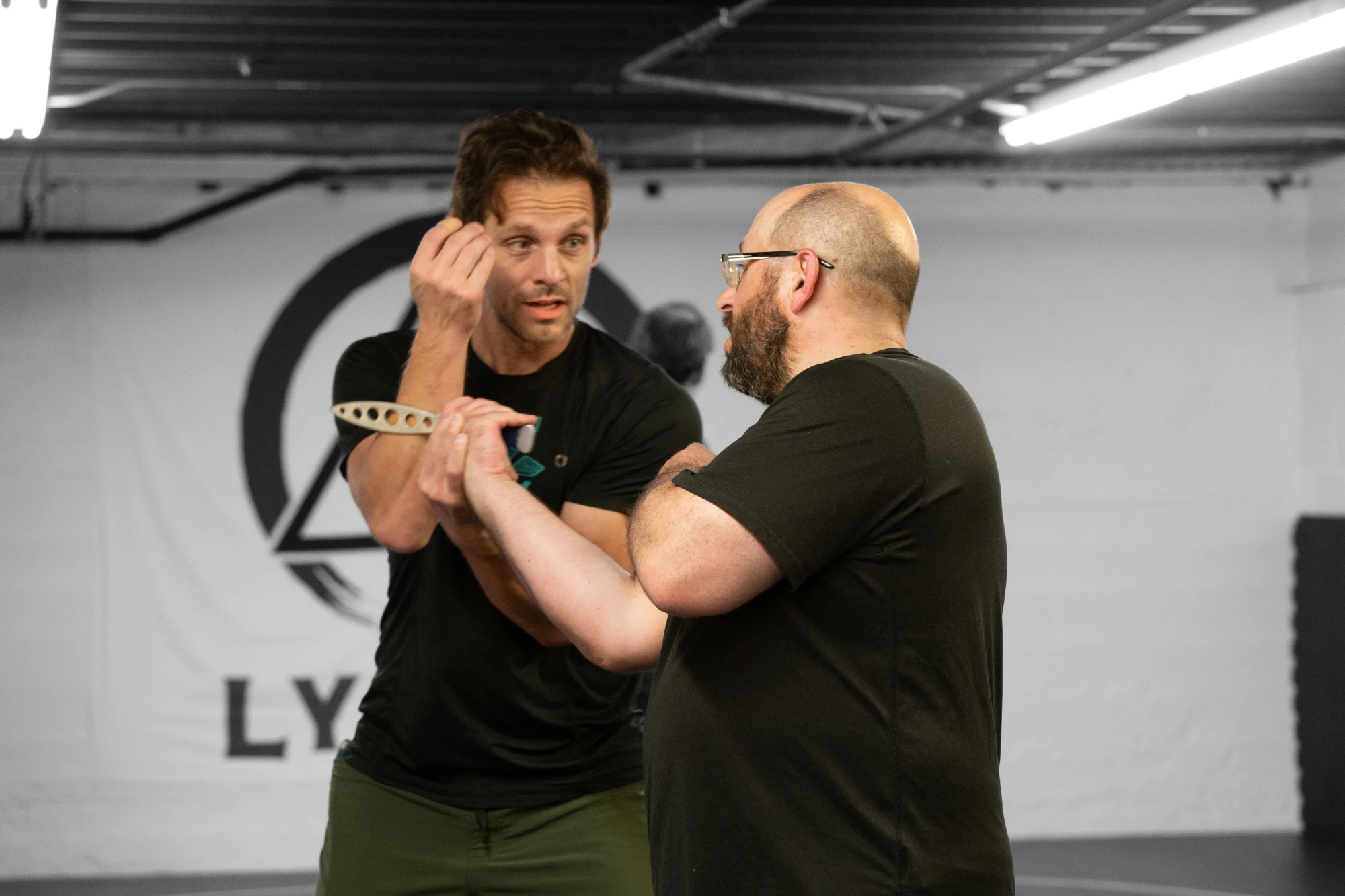
A way into the work.
Kali develops timing, coordination, distance, and adaptability through weapon and empty-hand practice. Training tools make lines of movement visible. Partner drills give those lines rhythm, pressure, and uncertainty. We study how ideas transfer while staying attentive to the differences between tools.
Philippines
Kali is one of the names used for Filipino martial arts, alongside Arnis and Eskrima. These traditions are diverse; names and methods vary by lineage and region. Our local practice comes through MKG Milwaukee, rather than representing every Filipino system as a single curriculum.
Historical context / further reading: MKG Seattle: Filipino Kali.
What are we really practicing?
The tool changes the problem
A training stick extends reach and makes an angle easier to track. It also changes timing and the consequences of poor distance. We begin with clear roles and controlled tools so partners can notice these relationships without racing through a pattern.
Flow is a changing exchange
A repeating drill can establish coordination, but fluency requires choices. Partners can vary cadence, alter an entry, interrupt the expected rhythm, or change which response is available. One variable at a time helps us see whether we are reading movement or merely anticipating the next count.
Transfer is a question to test
Similar movement patterns can appear in stick, blade-oriented, and empty-hand work. Similarity is a starting point for investigation, not proof that the tasks are identical. Reach, grip, contact, and context still matter. We look for transferable principles while respecting the limits of the drill.
A question to take to the mat:
Are you responding to your partner’s movement, or to the next beat you expect?
Lyceum’s approach, adapted from The Big List and our notes on learning and partnership.